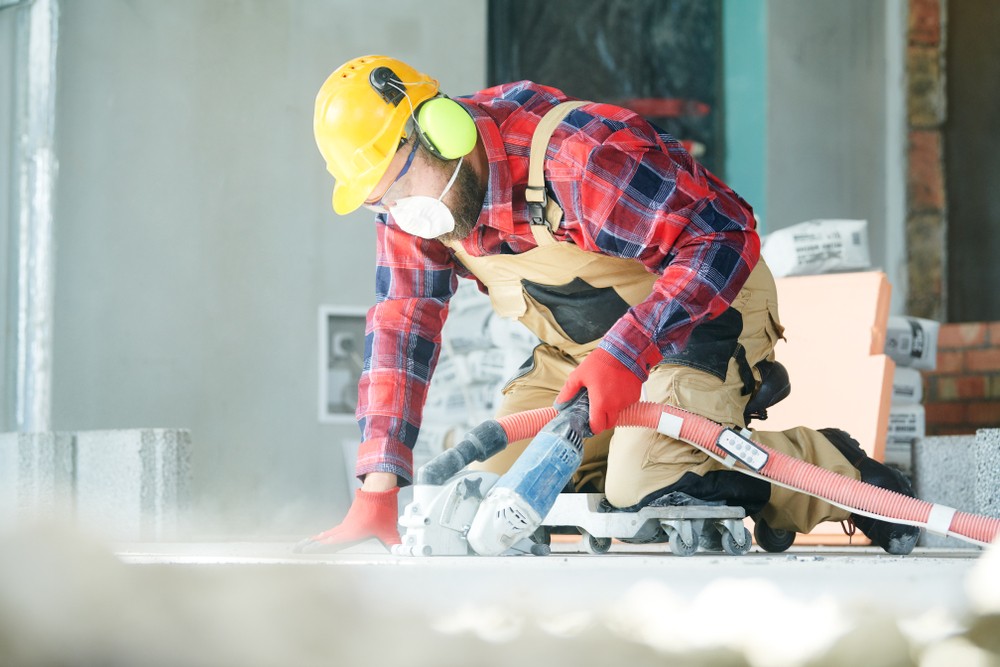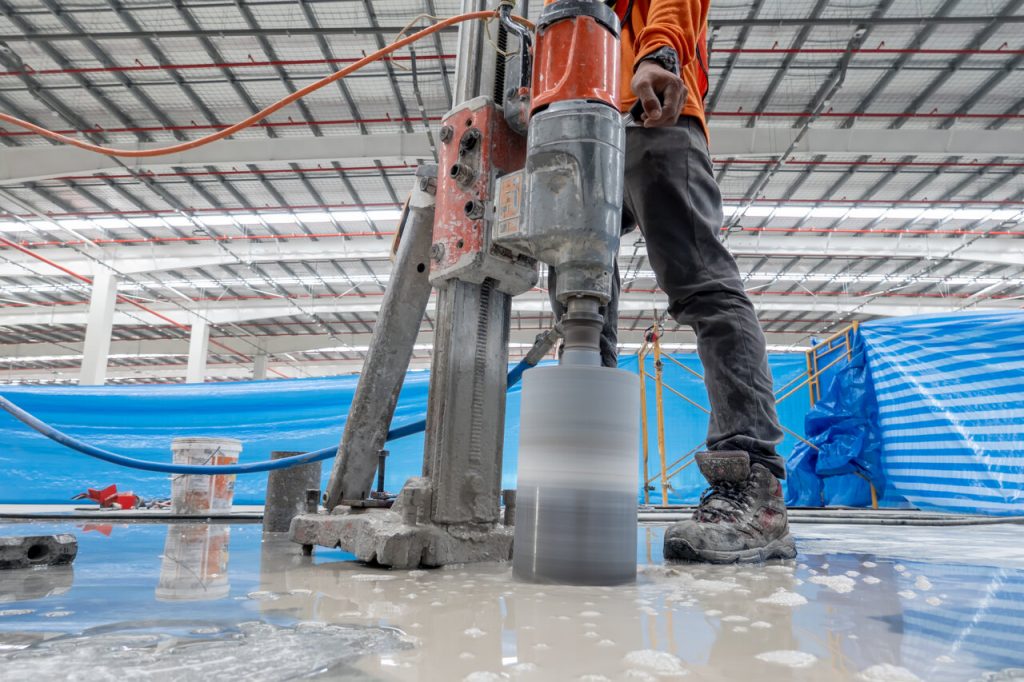
Concrete core drilling is one of the most common tasks in modern-day construction work. It might seem like an easy job when professionals do it but there is a lot more to it. Concrete coring or drilling is only as safe as the person doing it. 

Put this drill in the hands of an amateur and it is likely to result in expensive mistakes such as extensive structural damage. There is no lack of stories where amateurs have managed to cut embedded powerlines, drain lines or HVAC ducts when drilling through concrete. This is the reason it is recommended to engage the services of a professional concrete core drilling company.

Here are a few reasons why it pays to hire the services of a professional company for concrete core drilling:

1). Using the right Concrete Drill for the Project

If you think that all concrete core drills are the same with the only difference being the diameter of the drill bit, you couldn’t be more wrong. There are different types of concrete drills and the choice depends on the job at hand. 

For certain tasks, a hole can be made with the help of a handheld drill but if the hole size is bigger, it is always better to use a rig-mounted drill.

A stand-mounted or rig-mounted drill is recommended when the diameter of the hole is greater than 3 inches. A handheld model is usually sufficient in the hands of a trained professional if the diameter is within 3 inches.

2). Using the Correct Concrete Drill bit

Proper concrete drilling isn’t possible without the use of the right drill bit for the job. There are different types of drill bits and the choice typically depends on:

  • Hardness of the material
  • Compressive strength of the material

While the diamond-tipped bits are commonly used in concrete drilling, the difference lies in the bonding between the cutting edge and the bit hub.

The choice of a drill bit also depends on the depth of the hole. The standard diamond bits are sufficient for holes that are up to a foot long but if you need to go any deeper, professionals always recommend using barrel bits. These barrel bits are attached to the standard bits and help in making even deeper cuts as the barrel keep pushing the bit further.

Is Core Drilling Safe

3). Paying Attention to the Details

You wouldn’t want to cut powerlines, drainpipes or any other conduits passing through concrete when drilling the surface. Professionals are aware of potential mishaps that might happen when they do not pay attention to these seemingly small details. 

In short, they have the experience to know how to prepare the surface for drilling and what precautions need to be taken to avoid any potential issues.

4). Knowing which Accessories to use for the Project

Professionals know which standard attachment to use when they are drilling concrete. A vacuum stand is recommended for use on an angled or flat surface as it keeps the drill stable throughout the drilling process. 

On the other hand, a wall anchor attachment is recommended for use when the surface that needs to be drilled is vertical. Also, concrete drills are heavy and professionals always recommend the use of safety chains to keep things stable when cutting through the concrete.

5). Professionals have Experience

A concrete core drill isn’t like the typical handheld drill you use for tightening screws. It is heavy equipment that requires a lot of strength and hundreds of hours of experience to learn how to use it in the right manner. 

In short, handling it in the right manner requires hours of training. If the drill isn’t handled properly, the cut might not be straight and the finish will not be as smooth as you would expect from a professional.

Final Thoughts

Overall, concrete coring is a widely used process in the construction industry. It is typically used for making way for electrical conduits, water pipes, HVAC systems and for cutting windows or doors through concrete walls as well as for various other purposes. It involves the use of heavy equipment. 

Professionals with years of experience know which equipment to use and how to use that equipment to achieve a superior finish and keep everything safe. This is why you should never try to drill concrete on your own as it is likely to result in expensive mistakes.

Hire a Core Drilling Service - Vic Sawing & Drilling

Vic Sawing & Drilling is a licensed concrete cutting service with an excellent reputation for safe and efficient drilling, sawing and cutting operations. Our team of professionals is capable of handling jobs of all sizes and we always follow the OH&S codes to ensure safety at the worksite.

If you are looking for a concrete drilling company that is trustworthy and reliable, then don’t go past Vic Sawing and Drilling. Please call us today on (03) 8786 3621 or leave an enquiry.
Read more

Concrete drilling is the process of cutting a cylindrical hole in concrete, granite and a variety of other hard materials with the help of a special drill. It is widely used in the construction industry, geotechnical engineering and various other industries. While the primary use of core drilling is to cut a hole, sometimes it is also used to extract the material to be studied.

While there are separable applications of concrete coring, here’s a list of some of the most common applications:

  • Utility holes
  • Reinforcements
  • Plumbing pipes
  • HVAC ducts
  • Sprinkler systems
  • Electrical conduits

Sometimes, it may also be needed if a new window or door has to be cut out of an existing concrete wall.

How Does Concrete Core Drilling Work?

For proper concrete core drilling, a specific drill bit is required along with some accessories. The cutting edge of the drill bit is made of industrial diamonds just like blades used for other types of concrete cutting.

The drill used in the process is extremely powerful and heavy and there are a number of different types of drills used for the process. 

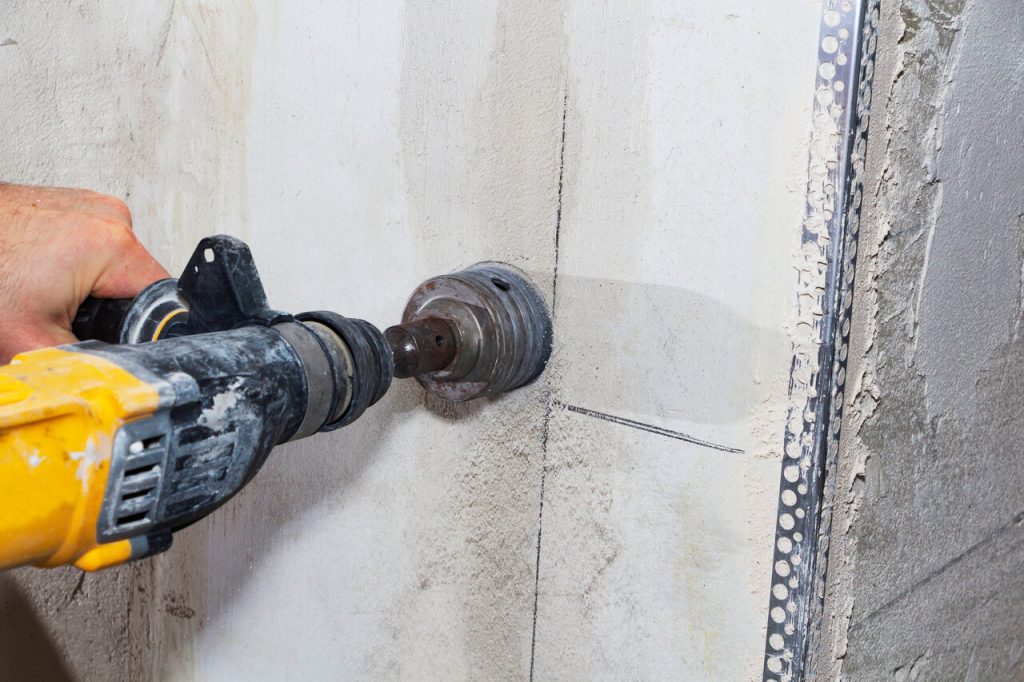
If the diameter of the hole to be cut is less than 3 inches, a hand-held drill is generally preferred but if the hole diameter is bigger than 3 inches, a drill with a standard attachment is used to keep the equipment in place.

Wet Vs Dry Core Drilling

Just like other types of concrete cutting, it could also be performed in wet or dry conditions. Wet core drilling is typically more efficient as the core tends to move faster compared to dry cutting. Wet core drilling also typically leaves a more finished surface as the dust generation is kept to a minimum during the process.

Wet core drilling is preferred for cutting a hole through reinforced concrete, soft or hard brick as well as concrete. In most cases, it is used for cutting into floors, walls or ceilings as well as for plumbing work or for the installation of electrical conduits.

The dry core drilling process is similar to wet drilling with the only difference being the absence of water for lubrication. Dry core drilling is used in cases where water can’t be used. For instance, if there are electrical wires nearby, you obviously can’t use water.

Core Drilling Explained

Benefits of Core Drilling

Core drilling offers a number of advantages compared to other cutting methods. Some of these advantages include:

1). It produces much less vibration and noise compared to other types of drilling methods such as using a hammer drill which makes it ideal for use in places where noise can be a problem such as schools, offices or hospitals.

2). It does not make too much mess which is not the case with other methods of drilling.

3). It is a much safer process of cutting through concrete compared to other methods.

4). It is a much more efficient process when it comes to concrete cutting as it is more accurate and more effective.

5).. It also costs less compared to other methods of concrete cutting.

How to Hire a Core Drilling Service?

If you need to hire a company offering core drilling services, here are a few things you need to consider to make the right choice:

  • Make sure they are properly licensed for concrete cutting
  • Check out their experience in the industry
  • Find more about the equipment used by them
  • Check out the experience and qualifications of the professionals who are going to do the job
  • Find out if they are also going to take care of cleaning once the drilling is complete
  • Make sure they are properly insured
  • Make sure they follow the recommended safety practices
  • Don’t forget to get a detailed estimate outlining the project details as well as a detailed breakdown of the cost

Final Thoughts

Concrete core drilling has been widely used in the construction industry for decades. It is a cheaper, more efficient and overall better process of cutting holes through concrete compared to the other methods. However, you will only get the desired results if you engage the services of a reliable, professional and experienced company.

Vic Sawing & Drilling offers a wide range of reliable and affordable concrete cutting and drilling services across all of Victoria. We have plenty of experience in the industry and are capable of tackling all kinds of jobs.

If you are looking for a concrete cutting company that is trustworthy and reliable, then don’t go past VIC Sawing and Drilling concrete cutting services. Please call us today on (03) 8786 3621 or leave an enquiry.
Read more

If you are in the concrete cutting industry, you may be thinking, "What are some effective methods of cutting concrete?" Perhaps you have an existing structure and want to test the concrete or install utility services such as lighting fixtures and internet services. How do you go about it? 

Concrete core hole drilling is a vital process in any construction setting. In this article, we will explore concrete core drilling and find out how long the process takes.

What is Concrete Core Drilling?

Before you can drill holes into concrete, you first need to understand the process behind it. Simply put, concrete core drilling involves drilling and removing clean, circular holes in concrete surfaces. This process is a proven way of creating openings for concrete and other hard materials. Applications of concrete core drilling include:

• Electrical wiring

• HVAC systems

• Plumbing services

• Water and sewer lines

The Process

Concrete core drilling is widely applicable in various industries. The process through which concrete is drilled depends on the client's needs and specifications. Here are a few things to take into consideration before embarking on the next core drilling project:

• Selecting a Drill

In most cases, a hand-held core drill is perfect for most concrete core drilling jobs. Typically, these drills are capable of drilling up to 3 inches in diameter which is adequate for the installation of important utility services. 

Select a drill that offers flexibility in performance as you will want to use it for other projects. Examples of drills include rig-mounted, hand-held, and intermediary drills that use both hand-held and rig-mounted.

• Stand Attachments

When drilling begins, you want to ensure that your drill is secured firmly to whatever surface you are drilling into. This is an important safety feature as it ensures the safety and welfare of your workers. 

For example, vacuum stands are suitable for drilling cores on surfaces that are generally flat whereas anchors are applicable when drilling into walls.

Concrete Core Drilling

• Power

For your drill unit to perform at its best, you need to consider the type of power unit that will run its motors. Motors in core drills are available in three options: electric, hydraulic, and air powered.

 The type of power available at your job site will determine the best motor suited for your usage. In addition, there are drill units that accommodate the user to determine the drilling speed and set the concrete hardness when it comes to drilling.

• Depth

Depending on the depths that you need to drill, most cores can be removed using a 1-foot drill bit. If you require further depths, barrel bits are extensions to the normal drill bit that allow you to drill even deeper.

How Long Is the Concrete Core Drilling Process?

When it comes to concrete core drilling, there is no one-size-fits-all. However, the setup, levelling, and cleaning processes take up to 10 hours, while the actual cutting procedure takes around 2 hours. 

To put things into perspective, cutting a slab of concrete with a linear edge of 1 inch (25.4 mm) in bit diameter and 9 inch (22.9 mm) in depth would take 18-20 seconds. 

Different projects, however, have different requirements, and thus the time taken will always differ. The time it takes to drill through concrete is influenced by:

  • Setup and levelling operations
  • Number of openings to be drilled
  • Depth of openings
  • Number of core drills present at the job site
  • The cutting process (2 inches per minute)

Vic Sawing - Where Quality Meets Professionalism 

Concrete core drilling is an essential part of the construction industry. That is why it is best to engage a professional team that will cater to your needs.

If you are looking for a concrete cutting company that is trustworthy and reliable, then don’t go past VIC Sawing and Drilling concrete cutting services. Please call us today on (03) 8786 3621 or leave an enquiry.

Read more

How much do you know about concrete core drilling? Do you know when it’s needed? What are the machines needed for core drilling? What is the purpose of concrete core drilling?

Concrete coring is not as widely discussed as concrete cutting and this is why most people are not really sure about the purpose of this method of concrete cutting. In this blog post, we’ll explore the topic of concrete core drilling, when it’s needed, what the purpose is and also, wet and dry core drilling.

What Is Core Drilling?

Core drilling is a method of cutting concrete. However, these are not your regular cuts. It is the process of making cylindrical holes in a concrete structure such as ceilings, walls or floors. It is typically used for accommodating HVAC ducting, plumbing piping, electrical conduits and other such things.

Not every place is conducive to a hammer and chisel. Also, using a hammer and chisel for making holes in a concrete wall or floor doesn’t always result in a clean cut and it takes a lot of time. In such environments, concrete drilling is much more effective.

What’s the Need for Core Drilling?

It is one of the most widely used methods of making holes in concrete. Concrete is a tough material and it’s not easy to make holes. It is widely used for providing space for starter reinforcement bars, plumbing piping, electrical conduits, hold-down bolts and other such necessary things.

What Tools Are Used for Concrete Coring?

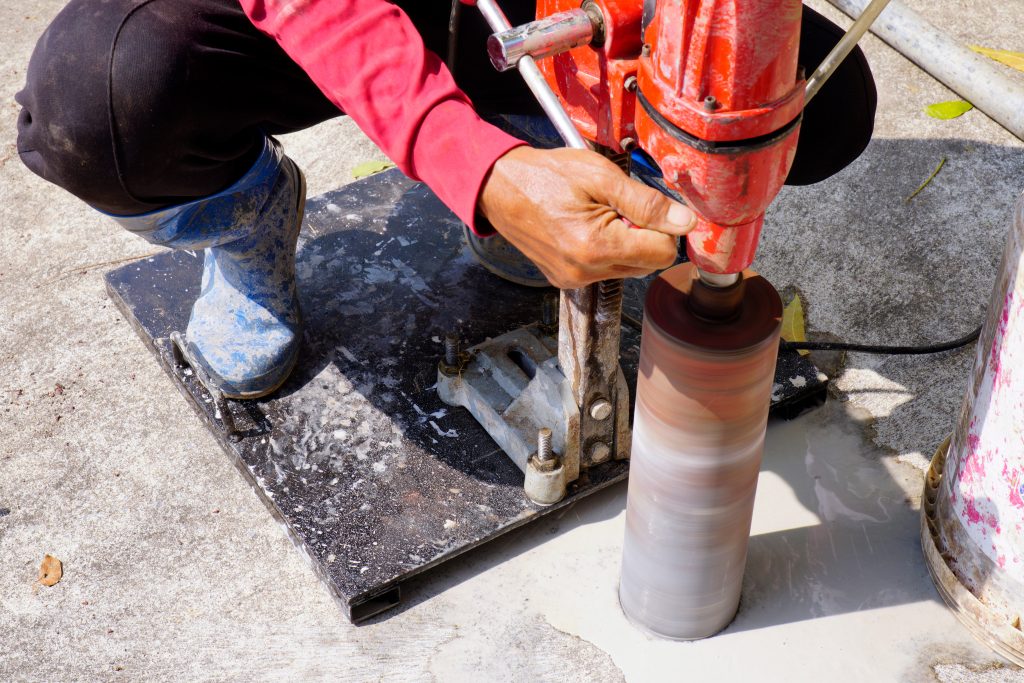
The most commonly used tool for concrete coring is a diamond core drill. It looks a lot different from the commonly used drills. The major difference is the shape of the drill bit.

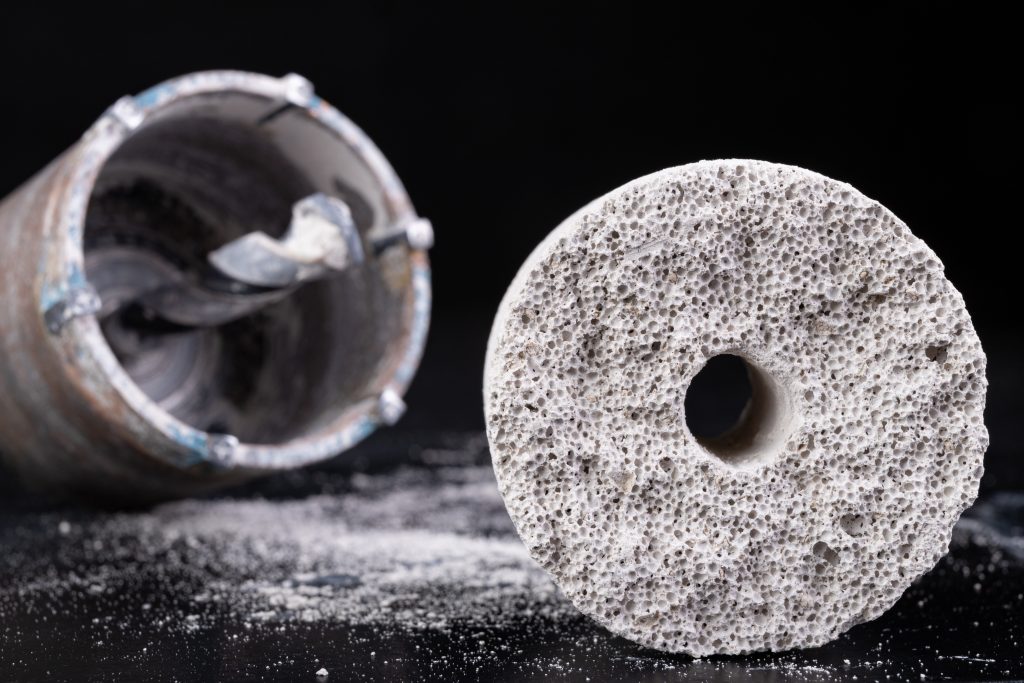
It is in the form of a steel tube with synthetic diamond beads at the end. Since it is a hollow tube, the concrete continues to move up the tube until the drill reaches the other end and you get a nice cylinder of concrete.

As far as the operation is concerned, the drill slowly rotates the bit while it is being cooled with the help of special liquids or water. Core drilling is nothing new but the equipment used for concrete coring ensures better accuracy, superior finish, less noise, reduced mess and minimal vibrations.

What Is Core Drilling

Dry or Wet Core Drilling

Core drilling can be done dry or with water or other cooling liquids. Mostly, wet core drilling is preferred as it is slightly faster and more efficient. Wet core drilling also ensures minimal production of dust and a cleaner cut as compared to dry core drilling.

Advantages of Concrete Core Drilling

One of the biggest advantages of concrete coring is its capability to maintain structural integrity. When holes need to be cut in existing structures, structural integrity may become an issue if the holes are not cut correctly.

With core drilling, you don’t need to worry about structural integrity as concrete coring performed by a professional with the right tool's results in minimal vibrations.

Another big advantage of concrete coring by a professional is superior finish and excellent accuracy. Keep in mind that concrete coring can also go wrong when not done by a trained professional. However, a diamond core drill in the hands of a trained professional will always produce a cleaner cut that won’t require any additional work.

Concrete coring is the perfect method for making deep cuts. You can use specialised drills to make cuts deeper than 70 cm. You won’t be able to make such deep cuts with a concrete saw. It provides a lot of flexibility as successive holes can be made together to cut concrete in a variety of shapes.

Final Thoughts

Overall, concrete core drilling is a widely used process for making cleaner, safer and more precise cuts in concrete. It has a variety of applications and can be used to make almost any kind of concrete cut.

If you are looking for a concrete cutting company that is trustworthy and reliable, then don’t go past VIC Sawing and Drilling concrete cutting services. Please call us today on (03) 8786 3621 or leave an enquiry.
Read more

Did you know that concrete cutting required a lot of backbreaking work in the early 1900s? There were no concrete saws during those days.
Cutters had to use rudimentary tools such as hammers and chisels to cut concrete in the good old days. Things were hard, tedious, and time-consuming.
Construction workers had to spend days and even weeks cutting large blocks of concrete. However, the latest concrete cutting technology has changed all of that.
Today, you can cut concrete efficiently and precisely within a few minutes thanks to power tools like concrete saws. Therefore, in this article we will take a look at the following:

  • Dry Cutting Advancements
  • Silica Standards
  • Precision
  • The Evolution Of The Concrete Saw

Dry Cutting Advancements

For many decades in the past, wet cutting was the only method used to cut concrete. Wet cutting was favoured because it was able to keep the blades cool when they became hot.
Wet cutting also helped to control the amount of concrete dust. When dry cutting machines were developed, the blades of the tool wore out in about ten minutes due to extreme temperatures generated during the cutting process.
Finally, in the 1980s, laser welding technology was introduced in the aerospace industry. Concrete tool manufacturers added a diamond segment to a steel blade and there emerged the concrete cutting tool for dry cutting.
Handheld concrete saws also emerged with this new technology. People in the industry were satisfied with this new saw and nicknamed it "Quickie Saw." It made quick and easy cuts on concrete slabs.

Silica Standards

Concrete dust has been a big problem in the concrete industry for many years. Concrete dust contains silica - which is a health hazard for construction workers.
Regular exposure to silica can be a detrimental hazard for the respiratory health of construction workers. The authorities have declared new standards to limit the exposure of concrete workers to silica dust.
The Permissible Exposure Limit (PEL) for silica dust is 50 micrograms at present. Concrete saw manufacturers are developing new technologies and solutions for concrete dust management.
The latest concrete saws use vacuum systems to eliminate dust and keep worksites safe. Dry cutting systems with vacuum attachments help clean up the site easily.

Precision

Precision in concrete cutting has changed a lot since the imprecise days of hammer and chisel. Humans are the cause of error and inefficiency when it comes to concrete cutting.
However, the latest technology has helped remove human error and improve the precision and efficiency of concrete cutting. The latest saws are straight and help achieve precise cutting.
Workers can make holes with a precise accuracy with the latest concrete drills - thanks to the advancements in concrete technology. Speciality cuts have become possible with the latest concrete cutting equipment.
That's why you need to choose the best concrete cutting tools to cut concrete today.

The Evolution Of The Concrete Saw

Modern concrete cutting tools are easy to manipulate and allow for precise cutting. Modern tools have relieved a lot of the burden from the operator and will help to reduce the instances of human error.
These tools offer a cleaner and quicker finish for your concrete cutting projects. The quality and toughness of concrete blades have also improved tremendously during the past several decades.
The evolution of the concrete saw has made it possible to reduce health hazards and other problematic issues of older concrete cutting tools.

If you are looking for a concrete cutting company that is trustworthy and reliable, then don’t go past VIC Sawing and Drilling concrete cutting services. Please call us today on (03) 8786 3621 or through our contact page

Read more

Those thin narrow grooves that are cut into the highway are simply annoying for most drivers and especially for motorcyclists. So why is it necessary to cut lengthwise grooves in the highway?
There are in fact several reasons why this is beneficial for drivers, the general public as well as the actual road surface.

  • It reduces noise
  • It increases the lifespan of the road surface
  • Provides better grip for tires
  • The lines provide a better surface for asphalt to adhere to
  • The grooves hold steel bars that reinforce the road surface and prevent concrete slabs from drifting

The grooves are not however intended to help drain away rain or other water on the road surface more effectively.
Even though these grooves are often referred to as "rain grooves", engineers employ other methods to efficiently drain water from the road surface such as drainage ditches alongside the highway.

1. Noise Reduction

Driving on concrete is noisy and in the past, grooves were cut into highways horizontally, increasing the noise level even more. Noisy highways are not only uncomfortable for drivers but also for residents living nearby.
To alleviate the problem, asphalt was poured onto the concrete to provide a smoother and therefore quieter road.
However, concrete and asphalt are not compatible partners and expand and contract at different rates when heated or cooled. This results in asphalt crumbling and disintegrating resulting in dangerous potholes and a road that needs to be resurfaced.
Newer engineering techniques allow concrete cutting to be done lengthwise instead of horizontally. These lengthwise grooves do a much better job at reducing the noise level produced by tires on concrete at high speeds.
Reducing noise is one of the most common reasons that lengthwise grooves are cut into concrete.

2. Increased Lifespan

Unlike asphalt, concrete is not poured to create a road surface but rather placed in large slabs. The edges of these slabs are prone to wear and tear and on some highways, tend to drift or slide.
In order to prevent this from happening, the slabs are reinforced with steel bars. The grooves on the highway are designed to hold these steel reinforcements.
Reinforcing a concrete highway can increase its lifespan by up to 10 years. The reason that concrete is used on so many highways in the first place is because it more resilient and durable than asphalt.
Although it may have some drawbacks, such as the noise factor, a longer-lasting road surface is preferable for highways that carry large amounts of traffic and heavy vehicles at high speeds.
This is also important to prevent potholes or crumbling at the edges of the road surface which result in hazardous driving conditions.
In addition, cutting grooves in concrete assists with the expansion and contraction of the road surface reducing wear and tear. It also provides a rough surface for asphalt to adhere to and prevent potholes and uneven road surfaces.
This is the ideal foundation for road milling.

3. Better Traction

Any road surface can become slippery under certain conditions such as heavy rain, sleet, snow and when oil collects on the road surface. The horizontal lines provide better tire traction under normal and hazardous driving conditions.
Vehicles are therefore less likely to slide on sleek road surfaces resulting in collisions that are very dangerous on highways.
Engineers put a lot of time and research into how certain road surfaces perform and what can be done to improve driving conditions as well as other aspects such as noise reduction and preventing wear and tear.
Lengthwise grooves that run in the same direction as traffic, are one of the most effective ways to address many of the issues that arise with road surfaces.

If you are looking for a concrete cutting company that is trustworthy and reliable, then don’t go past VIC Sawing and Drilling concrete cutting services. Please call us today on (03) 8786 3621 or through our contact page

Read more

Concrete cutting is a huge part of construction and renovation projects. In such projects, there is a need for precise and accurate cutting of concrete for the best results.
As such, the process should be carried out by highly trained personnel using the right equipment.
While there are many ways to cut concrete in demolition or construction projects, flush cutting remains one of the best methods that guarantee the best results, even for deep concrete cutting.
Are you planning a demolition project for selected sections of your walls or floor? Well, flush concrete cutting should be your priority.

What is Flush Cutting?

Flush cutting refers to the process by which flat concrete surfaces are cut out in a straight line. Flush cutting saws are used for this process and are essential for creating precise straight cuts on concrete at any depth.
As such, flush cutting saws are the best equipment for cutting concrete in areas such as roads, walls, and floors.
Flush concrete cutting is also ideal for cutting bricks and stone. However, this demands that the handler of such flush cutting saws be well trained and know how to manoeuvre the saw properly.
Flush cutting saws are smaller than other concrete cutting machines and are therefore easier to handle and operate in tighter spaces.

Tips for Accurate Flush Concrete Cutting

Flush cutting of concrete is aimed at precision and accuracy. Here are some tips that come in handy for flush concrete cutting:

  • Get the right equipment
  • Choose the right blades
  • Get a collection of cutting blades
  • Work on the timing

Get the Right Equipment

Flush concrete cutting can only be executed accurately if the right equipment is used. Flush cut saws are the best for the task as they are specialised for the flush cutting of concrete.
They have an externally mounted blade that allows the operator to flush against floors or walls. The best flush cut saws should be excellent for both indoor and outdoor concrete cutting, whether dry or wet.
Such saws will also have a magnesium blade guard that provides maximum strength for the saw as well as minimum weight.
Some flush concrete cutting saws also have an LED indicator that enables the operator to cut at maximum efficiency.
The right flush concrete cutting saws may also have tool-free detachable guide rollers for accurate straight cuts as well as reduced operator fatigue. Optional dust skids for these saws also ensures excellent control of dust for dry cutting.

Choose the Right Blades

Diamond blades are standard in the field of concrete cutting. However, not every diamond blade will be qualified for the flush concrete cutting job.
Operators need to get the specifications for the blades for accurate and precise flush cutting. These blades differ in diameter and the depth of cut and should, therefore, be chosen according to the desired results.

Get a Collection of Cutting Blades

As mentioned, every concrete cutting project requires a specific set of flush concrete cutting saws. This is why operators have various flush concrete cutting diamond blades.
This helps execute a range of flush concrete cutting projects as well as meet the various requirements in case adjustments arise.
For instance, operators may find the need to have a 4”/100mm, 5”/125mm, and a 7”/180mm flush cut blades to achieve different depths of concrete cuts.

Work On the Timing

Flush concrete cutting requires that operators work on their timing for straight and accurate cuts. Away from proper handling of the saws, operators should also know the right time for flush cutting concrete.
Working on hardened but half cured concrete guarantees straight cuts and less dust.
Flush concrete cutting involves cutting surfaces such as walls, floors, and roads along straight lines.
For accurate flush cutting of concrete, operators should choose the right cutting saws and blades, have a collection of the blades and operate the saws accurately.

If you are looking for a concrete cutting company that is trustworthy and reliable, then don’t go past VIC Sawing and Drilling. Call us today on (03) 8786 3621 or through our contact page

Read more

Are you involved in a concrete cutting project? Are you confused as to which type of concrete saw you should choose for the project?
A concrete cutting saw is a tool that runs on gasoline, pneumatic pressure, hydraulics or an electric motor. It is also known as a road saw, consaw or a slab saw.
A concrete saw is used for cutting hard materials like concrete, tiles, asphalt, brick, masonry, and other solid stuff.
There are different types of saws that range from compact handheld saws and chop saws to large walk-behind saws. The blades of concrete saws are commonly made from diamond for effective and precise cuts.
Diamond blades should be cooled due to the significant friction generated during the cutting project as well as reducing dust in the process.
This article provides information on the many uses of concrete saws and different kinds of concrete saws on the market. We will take a look at the following:

  • Different Types Of Concrete Saws
  • Many Uses Of Concrete Saws

Different Types Of Concrete Saws

There are many types of concrete saws out there. Every saw will serve a purpose depending on the job you need to get done.
It's important to understand the different types of saws out there so you can choose the best tool for your next concrete cutting project.
Chainsaws are some of the most popular concrete saws on the market today. These saws will give you an unmatched precision due to the hydraulics of the tool.
Hydraulics give the tool enough power to cut through concrete and reach more than two-feet deep in the concrete. However, you shouldn't use this type of saw to create lines and corners on concrete.
Hand saws are available in many sizes and shapes. They can help you to complete the concrete cutting project more efficiently. You can slice through brickwork and other masonry using this tool.
You can make small cuts with hand saws compared to chainsaws. Wire saws let you deal with a large amount of concrete at once. You can make precise cuts on large slabs and blocks of concrete with a wire saw.
Wire saws are ideal when you have to deal with foundations, pillars, and depths underneath the concrete surface. Core drills are effective when you have to cut through concrete surfaces.
Whether you need to cut one inch or up to 5-feet deep into the concrete, core drills are ideal for the project. You will need the core drill when you are laying down utility cables and wiring a building.

Many Uses Of Concrete Saws

Concrete saws have many uses and benefits. You can use a concrete saw to cut through tiles, bricks, concrete, blocks of stone, and other hard materials.
They can be used to cut openings or channels through concrete blocks, walls, and slabs. Concrete saws can be handheld, mounted on a stand or wheeled manually or by an electric motor.
Working with a concrete saw will expose the worker to many hazards like cutting blades, push-back, kick-back, pull-ins, and silica dust. That's why training and proper work practices are the key to success and safety with a concrete saw.
You need proper training to safely and effectively use a concrete saw. The correct sized cutting blade should be installed properly and guarded before using the concrete saw.
The speed of the saw shouldn't exceed the manufacturer’s suggested RPM. You should use the correct blade for the project and adhere to all safety rules and wear protective gear when using a saw to cut concrete.

If you are looking for a concrete cutting company that is trustworthy and reliable, then don’t go past VIC Sawing and Drilling. Call us today on (03) 8786 3621 or through our contact page

Read more

Are you interested in dry cutting concrete services but have concerns about how safe it is? Would you like to learn more about how dry concrete cutting equipment has changed over the years to ensure that all those involved work in a safe and efficient way? 
From the introduction of dry cutting blades, dry cutting saws and vacuum attachments, please read on below to find out how recent innovations have changed how dry concrete cutting is done in today’s modern world.

The History Of Dry Concrete Cutting

While the invention of a blade that was capable of cutting through stone/concrete took place back in the mid-nineteen twenties, dry concrete cutting only became common practice decades later.
The first dry cutting blades, carborundum type abrasive blades, got limited use in job sites back in the fifties, sixties and seventies.
This was mainly due to the fact that the blades, even though cheaper than diamond blades used in wet concrete cutting at the time, would get worn out too quickly.
Fortunately, technological advancements saw the introduction of a more resilient dry concrete cutting blade, made by laser welding diamond segments onto a steel core, in the early eighties.
It is worth noting that all this time, dry cutting blades were only used on wet cutting concrete saws as there were no specially designed dry cutting concrete saws.
It is not until the turn of the millennium that the first dry cutting concrete saws were introduced into the market.
However, while these new innovations did not bring about the problem of the production of hazardous dust in concrete cutting, the increasing use of dry concrete cutting at job sites made it a major concern.

Solving Common Dry Cutting Problems

In wet concrete cutting, water was, and continues to be used to overcome the issue of excess dust produced during concrete cutting jobs.
However, this also brings in the need for a water source and site cleaning work due to the messy aftermath of wet cutting.
So, while dry concrete cutting helped workers avoid the issues associated with wet concrete cutting, it left them exposed to huge clouds of dust and debris.
This, combined with research findings that linked the exposure to freshly released silica dust and debris from concrete cutting and grinding operations to serious and even fatal lung conditions created the need for further innovations in the field of dry cutting concrete.
To guarantee the safety of workers, industry regulators introduced safety guidelines that required all workers to wear protective gear.
Personal Protective Equipment (PPE) was designed to shield workers from exposure to hazardous fumes and dust produced during dry concrete cutting projects.
However, further understanding of the issues surrounding dry cutting of concrete blocks combined with the fact that a large number of workers were still not wearing safety gear led leading dry concrete cutting saw manufacturers to add new safety measures to the saws themselves.
To ensure a safe working environment, with the lowest possible amount of hazardous dust levels, today’s dry cutting saws come with a highly effective vacuum attachment.
The attachment sucks in all of the dust and debris produced by the cutting action and dumps it into a bag.
The most advanced dry cutting saws also come with a highly capable filter that is meant to ensure that only the healthiest air is re-circulated back into the environment by removing even the smallest of these hazardous dust particles.

Conclusion

While the introduction of a stronger dry-cutting blade and specialised dry cutting saws led to the widespread use of dry cutting saws in concrete cutting projects of all sizes, the introduction of smart innovations such as the addition of vacuum attachments fitted with the most effective filtration systems is ensuring safety and efficiency in every project.
As we move into the future, you can expect to see further innovations in this regard.

If you are looking for a concrete cutting company in Melbourne that is trustworthy and reliable, then don’t go past VIC Sawing and Drilling. Call us today on (03) 8786 3621 or through our contact page

Read more

Are you involved in concrete cutting? Do you know the difference between wet concrete cutting and dry concrete cutting? Please continue reading below to learn more.
Diamond cutting blades are some of the most effective concrete cutting blades available today. Concrete sawing and grinding have become easier and more effective today with the introduction of diamond blades.
This article provides information on diamond blades and wet vs. dry concrete cutting. In the process, we will take a look at the following:

  • Diamond Concrete Blades
  • Wet Concrete Cutting
  • Dry Concrete Cutting

Diamond Concrete Blades

These blades are made of diamonds that are arranged in a metal matrix. Diamond blades consist of two major components such as the steel core and the segment.
The steel core is a round and flat metal disc that supports the outer segments of the blade. Diamonds are attached to the metal core using laser welding, sintering or vacuum brazing methods.
Diamond blades grind the concrete surface more than cutting it. The diamond crystals in the blade will do the grinding work and the metal matrix will hold the diamonds in place.
There is a "bond tail" that trails behind each exposed diamond in the blade - which helps support the blade. After extensive use, the exposed diamonds will begin to crack and fracture.
The matrix that holds the diamonds will also wear off. Eventually, the diamonds will completely break up. The cycle of erosion will continue until all of the diamonds in the metal are gone.
This is the time the operator needs to replace the blade of the cutting device.

Wet Concrete Cutting

Wet cutting is a popular method for cutting concrete surfaces. The latest studies show that wet cutting is ideal for controlling dust exposure. Silica dust can be harmful to your health and well-being in the long run.
It affects the lungs and respiratory system and can result in lung cancer and even death with regular exposure. Water is used in wet concrete cutting applications to wash out particles and remove silica dust.
Water will also act as a coolant for the cutting blade and help make deeper cuts in the concrete surface. Water will also prolong the lifespan of the diamond blade. That's why wet concrete cutting is encouraged most of the time.
If you want to keep silica dust away when cutting concrete, you should opt for a wet cutting device. Using water will reduce the respirable dust concentration by at least 85%.
Water also prevents the diamond blades from overheating when cutting concrete. Overheating can reduce the lifespan of the blade and make it inefficient after some time.
Water lubricates the blade and improves its efficiency in the process. Wetting will also make the cutting process less noisy. Wet cutting will keep everyone safe if you choose to cut concrete in your home or garden.

Dry Concrete Cutting

Dry cutting is another popular method of concrete cutting. You should select the right diamond blade for dry cutting. A laser-welded diamond cutting blade is the best option in this regard.
These blades are specifically designed for dry cutting. Alternating and thin cutting is encouraged in dry cutting to let the air flow around the blades. Air is needed to cool the blades in the process of dry cutting.
That's why dry cut blades are made with wide space between segments. The operator doesn't have to apply great force when using a dry-cutting blade. Great force can damage the blade due to overheating.

If you are looking for a concrete cutting company that is trustworthy and reliable, then don’t go past VIC Sawing and Drilling. Call us today on (03) 8786 3621 or through our contact page

Read more